

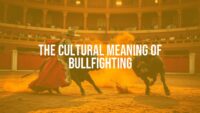
Bullfighting, called la fiesta brava (“the brave festival”) or corrida de toros (“running of bulls”) in Spain, is much more than just a show. In Spain and many Spanish-speaking countries, it is a deep tradition, considered an art or old ritual and not just a sport. Bullfighting has been important to Hispanic culture for centuries, representing the struggle between people and nature, bravery and destiny, and sometimes life and death.
The main feature of bullfighting is the challenging meeting between the bullfighter and the bull. Bullfighting fans admire the skill, style, and bravery of the matador. As author Ernest Hemingway said in Death in the Afternoon, “Bullfighting is the only art in which the artist is in danger of death.” The real risk adds a strong sense of drama, making it special to those who watch and support it.

Bullfighting and National Identity
Bullfighting’s long journey from ancient rituals to a nation-wide symbol is remarkable. In Spain, it is known as la fiesta nacional, showing its role in the country’s self-image. The roots begin in ancient bull worship, leading to the organized events enjoyed by royalty, and later, by all people. It became a powerful sign of Spanish tradition, handed down from one generation to the next.
For many Spanish thinkers, especially after 1975, bullfighting has shown the spirit of Spain. It stands out from the rest of Europe, and supporters see it as a symbol of the nation’s energy. Even with recent criticism, its history makes it an important part of Spanish identity for many people.
Symbols and Rituals in Bullfighting
Bullfighting is full of meaning. Experts have explained it as a clash of culture and nature or as a symbol for relationships, like family roles. The bull, specially bred and strong, is seen as a respected rival. The fight’s steps and costumes add to its importance.
Bullfighter Conchita Cintrón said the bullring is like a small version of the world, where “life, death, ambition, despair, success, failure, faith, desperation, courage, cowardice, kindness, and meanness” all appear in one afternoon. This shows that bullfighting is more than fighting a bull; it’s facing one’s own fears and emotions. Bullfighting and religion are also connected, with fighters asking for the Virgin Mary’s protection, and many events happening during local religious holidays.
History and Growth of Bullfighting
Bullfighting’s past is old and complex, tracing how people have related to cattle throughout history.
Bullfighting in Ancient Cultures
Humans have been interested in bulls for thousands of years. Prehistoric rituals in Mesopotamia and the Mediterranean involved bulls as signs of power, fertility, and the universe. The Epic of Gilgamesh describes an early bullfight, where heroes challenge the Bull of Heaven.
Ancient Cretans created art showing athletes jumping over bulls, and Greek myths often feature bulls. A painting from 2000 BC in Knossos, Crete, shows both men and women confronting a bull. In Roman times, public fights between humans and animals were held, which spread to the Iberian Peninsula. Some historians think Roman Emperor Claudius brought bullfighting to Spain when gladiator fights were banned.

Main Historical Moments in Spain
During the Middle Ages, Spanish bullfighting became a sport for the wealthy who would fight bulls from horseback using lances, usually in town squares. Historical figures like Charlemagne and El Cid enjoyed such events. An old record from 1128 noted bullfights at the wedding celebration of Alfonso VII of León and Castile.
A major change happened around 1726 when Francisco Romero from Ronda moved the fight to the ground, using a red cape (muleta) and a sword (estoc) to finish the bull. This drew much larger crowds, as common people on foot took the place of aristocrats on horseback. By the late 1700s, bullfighting was popular with the public and became a respected job. The period from 1914 to 1920, called the “Golden Age,” saw famous matadors like Juan Belmonte and Joselito bring new style and artistry to bullfighting.
Bullfighting in Other Countries
When Spanish colonists moved abroad, they brought cattle and bullfighting with them. This led to new regional versions in the Americas, Asia, and even France. In the 19th century, the south of France began hosting its own bullfights, with both Spanish and local styles. Today, countries like Portugal, Mexico, and others in Latin America have their own traditions. In Portugal, for example, the bull is usually not killed in the ring. There are also versions in Korea, Japan, and parts of the Middle East where bulls compete against each other.
Different Types of Bullfighting
Although Spanish-style bullfighting is the most well-known, there are many different traditional styles around the world. Each follows its own set of rules, costumes, and customs.
Spanish Bullfighting
Spanish bullfighting, or corrida de toros, is the most famous. A typical Spanish bullfight involves three matadors, each facing two bulls raised specifically for their strength and aggression. The official season, called la temporada, goes from late March to early October, with big events like the San Isidro festival in Madrid bringing in top talent from many countries.
| Stage (Tercio) | Action |
|---|---|
| 1. Tercio de varas (Lancing third) | The bull enters the ring, and the matador and his assistants test its strength. A picador on horseback lances the bull in the neck. |
| 2. Tercio de banderillas | Assistants place sharp sticks (banderillas) in the bull’s shoulders to make it more active. |
| 3. Tercio de muerte (Third of death) | The matador uses a red cape and sword, performing a set of moves before killing the bull with a sword thrust. |

At the start, the participants enter in a parade (paseíllo). Matadors wear colorful suits called traje de luces, while the ring itself is called a plaza de toros.
Recortes and Non-lethal Styles
In Spain, there are also non-lethal shows like recortes-especially in Navarre and Valencia-where men without special costumes leap, dodge, and jump over bulls without harming them. These are athletic events focused on skill and acrobatics. Sometimes there are comic routines (espectáculos cómico-taurinos) for fun. The running of the bulls (encierro), such as in Pamplona, involves people running ahead of bulls in the streets. A nighttime event, toro embolado, sees a bull released with flaming balls on its horns, watched by local crowds.
Portuguese Bullfighting
Portuguese bullfighting (corrida de touros) is different because the bull is not killed in the ring. The event has two main parts:
- Horseback fight: A rider (cavaleiro) uses a horse to stick small darts (bandeiras) into the bull’s back.
- Pega: A group of men (forcados) faces the bull directly. One man grabs the bull’s head while others hold on and try to stop it.

After the event, the bull is led away and killed privately. If a bull is especially brave, it may be pardoned and used for breeding. In the Azores, the bull is led by a rope and not killed, taking part in more than one event.
French Bullfighting
In southern France, both Spanish-style and local styles exist. Local versions, like the course camarguaise, involve teams of people grabbing rosettes tied between a young bull’s horns using a special tool. The bulls are not hurt and are the main draw of the event. Another style, course landaise, uses cows and includes dodging and jumping without harming the animals. French law protects traditional bullfights in certain regions, and community resistance has kept local customs alive despite safety concerns.
Latin American Bullfighting
With roots from Spanish colonization, Latin American countries have adapted bullfighting to fit local values. For example:
- Bolivia: The bull is neither killed nor injured.
- Dominican Republic: The bull is teased and dodged until it gets tired.
- Costa Rica: Killing the bull is banned; amateur fighters perform with the bull and try to ride it. The famous bull Malacrianza became a national figure here.
- Ecuador: Public killing is banned in many regions; killing happens privately if at all.
These different styles range from traditional events that end with the bull’s death to non-lethal, more artistic performances.
Bullfighting’s Role in Religion, Politics, and Society
Bullfighting is tightly connected to local beliefs, religious festivals, political debates, and community traditions. The topic often leads to strong debates and legal fights.
Bullfighting and Religion
Bullfighting has a long link to religion, especially in Spain. Church leaders in past centuries spoke out against it, claiming it distracted people from faith. Pope Pius V in 1567 even banned it and threatened supporters with excommunication. Still, this ban was quickly eased, and bullfights often take place during religious festivals. Bullfighters pray for safety and join religious groups, showing how bullfighting and faith often mix.
Politics and Bullfighting Law
Laws and attitudes about bullfighting differ by region. In many parts of Spain and Portugal, and in some Latin American countries, it’s still legal. However, many countries have banned it. Political groups often disagree: left-wing parties generally oppose it, while right-wing ones support it.
- Catalonia (Spain) banned bullfighting in 2010, but this was overturned by the Spanish Constitutional Court in 2016.
- Mallorca’s bullfighting ban (against killing the bull) was declared partly unconstitutional.
- Colombia will fully ban bullfighting in 2027.
- Mexico City banned killing bulls in fights and replaced them with non-lethal events.
Bullfighting as Cultural Heritage
To protect bullfighting from bans, many places-like Seville (Spain, 2012)-list it as important cultural heritage. The European Union also recognizes bullfighting as part of national culture in some cases. These rulings are meant to stress tradition, even as opposition grows.
Bullfighting in Art, Books, and Film
The drama of bullfighting has influenced many writers, filmmakers, and artists, offering many stories about bravery and fate.
Famous Works on Bullfighting
Some well-known examples include:
- Carmen, an opera by Georges Bizet, features a bullfighter as a key character.
- Ernest Hemingway’s books, like The Sun Also Rises and Death in the Afternoon, describe bullfighting in detail and explore its meaning.
- Lorca’s poem Llanto por Ignacio Sánchez Mejías mourns a bullfighter’s death.
- Movies, such as Blood and Sand and comedies by the Three Stooges or Laurel & Hardy, often use bullfighting as a theme.
- Animated movies like The Book of Life and Ferdinand tell stories from the bull’s side, sometimes arguing against violence.
Well-Known Writers and Artists
Apart from Hemingway and Lorca, many writers and artists have built careers on bullfighting. Examples include:
- Barnaby Conrad: wrote about bullfighting in both fiction and non-fiction.
- James Michener: described bullfighting traditions in Iberia and Mexico.
- Tom Lea: Wrote and illustrated The Brave Bulls.
- Sidney Franklin: Wrote his own story, Bullfighter from Brooklyn.
- Kenneth Tynan: Wrote Bull Fever.
- Alexander Fiske-Harrison: Into the Arena details his training as a bullfighter.
Women in Bullfighting
Bullfighting has long been seen as a man’s job, but over time, many women have overcome barriers to join this world.
Women as Matadors
Women have fought bulls for centuries, usually with less recognition and sometimes facing laws that banned them. Martina García was an early example in the 1800s. In 1908, Spain banned women from bullfighting, but the 20th century saw more women entering the profession:
- Conchita Cintrón (Peru): Fought in Portugal and South America, known for her bravery.
- Patricia McCormick: Became the first American professional female matador in 1952.
- Bette Ford: First American woman to fight on foot in Plaza México.
Changing Attitudes
In 1974, Spain’s Supreme Court ended the ban against female bullfighters, allowing women to officially join the profession. Cristina Sánchez de Pablos, debuting in 1993, became one of the first nationally known female matadors in Spain. While women still face challenges, their growing presence highlights changing ideas about gender and tradition.

Popularity, Debate, and Criticism
Bullfighting is a source of pride for some and a point of protest for others. While it is still important in several countries, its overall popularity is dropping, and debates about its ethics are growing.
Where Bullfighting is Still Popular
Bullfighting is still important in:
- Spain: Longest bullfighting season; famous arenas like Las Ventas in Madrid.
- Peru: The oldest bullring in the Americas (Acho).
- Portugal and Southern France: Have their own versions.
- Mexico, Colombia, Ecuador: Have local traditions, but some are facing bans.
Still, the total number of bullfights is falling. In Spain, bullfighting events dropped by 60% from 2007 to 2014. Only a small part of the population attends these events now, especially fewer young people.
Arguments for Bullfighting
- Supporters see it as a cultural art, not a sport, linking it to tradition and ritual.
- Matadors and bulls are both respected; bulls are often said to live better lives than regular cattle before entering the ring.
- Bullfighting brings in money and jobs. In Spain, it brings in about €1.6 billion and supports around 200,000 jobs.
- Some say it is less violent than boxing or football and less cruel than slaughterhouses.
Concerns About Animal Welfare
- Critics call bullfighting cruel because bulls suffer during the event and are killed at the end.
- The bulls are weakened with lances and barbed sticks before facing the matador.
- Horses used in the event have also been harmed, though rules now protect them with padding.
- Many animal rights groups and the public see it as a “blood sport” and fight for bans.
Media and Public Opinion
More people are turning against bullfighting, especially young people. A 2016 poll in Spain found 58% of people aged 16-65 opposed it, with only 7% support among those aged 16-24. Most people were not proud of bullfighting as a tradition. In France, 74% wanted it banned in a 2018 study.
Spanish state TV stopped broadcasting bullfights for years due to concerns about violence and costs. Funding for bullfighting is also controversial, with most Spaniards in a 2016 poll saying they opposed government money going to bullfighting. The COVID-19 pandemic made this debate even more intense when the industry asked for support.
Modern Views on Bullfighting’s Future
There are ongoing arguments about whether bullfighting can survive as society changes. Younger people support it far less than older generations do, and new laws and public pressure could lead to more reforms or bans.
Younger Generations’ Opinions
Surveys show that fewer and fewer young people support bullfighting. For example, in Spain, only 7% of those aged 16-24 support it, compared to 29% of those aged 55-65. Most young people do not feel bullfighting is something to be proud of. The same trend appears in other countries, like France. Animal rights awareness is a big reason for this change.
Tradition vs. Change
- Some want to keep bullfighting as it has always been, seeing it as cultural heritage and an important tradition.
- Others push for change, suggesting non-lethal versions where the bull is not killed or hurt, as done in parts of France, California, Texas, Ecuador, and Costa Rica.
- Colombia will ban bullfighting altogether in 2027.
- The main challenge is finding a balance between old customs and new attitudes about animal welfare.










Leave a comment