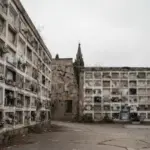

The air in Quinta de Torre Arias carries a wild, untamed scent. It evokes a nature that, for too long uncontrolled, now blossoms as it pleases, like a rebellious curl refusing to return to its place. It is stately, yet without reaching the grandeur of its neighbors, El Capricho and Quinta de los Molinos. Nor does it attract as many visitors. Like them, it was conceived for the recreation of the nobility, but Torre Arias possesses something special: its agricultural character. More than an illustrious garden, which it also is, it was a model farm. And if today anyone can stroll through this park, it is thanks to the struggle of the neighborhood residents who protect it from private interests.
A History Rooted in the Land
Its origins date back to 1580. Philip II granted a high-ranking military officer the title of Count of Villamor and ceded him lands near the village of Canillejas. Here, a recreational estate with a two-story palace was built. Over time, the quinta passed from hand to hand: the House of Osuna, the Garro family, the Marquis of Bedmar… It even became the property of a fraternity of Dominican monks. It changed owners, but always maintained its agricultural character, with a dairy, stables, pigsties, granary, hayloft, wineries, greenhouse… From its inception, it served as a productive estate, and that has always been the common thread of its history.
And also, at least until a few years ago, it remained in private hands and closed to the public. “The only time, until today, when the quinta ceased to be private property to be taken over by the people was during the Spanish Civil War,” says Daniel Liébana, spokesperson for the citizen platform Quinta de Torre Arias. The owner of the estate, then the Count of Torre Arias, fled, and the quinta was occupied by a company of CNT militiamen. It opened for the first time to the people of Madrid. “Very old people from Canillejas remember that, when they were children, they would go there to see how the shells flew from one side to the other because it was right on the front line,” Liébana assures.
The Countess’s Legacy and a City’s Growth
After the war, the count returned and recovered his estate, which once again became a private residence until the eighth Countess of Torre Arias. It was the 1980s, and Madrid was then in full growth, making these lands perfect candidates for urbanization. The Countess, without descendants and with a large number of properties, reached an agreement with the City Council of Tierno Galván. “The deal was that the estate would be ceded as a public park for all Madrileños, and in return, 180 hectares of her rustic land would be reclassified as urban. The press articles of the time highlight that the countess was very generous, but in reality, what lies behind it is a major real estate operation. Those 180 hectares brought her around 500 million euros in today’s money,” says the platform’s spokesperson. However, the agreement included that the City Council would have to wait until the aristocrat died to take possession of the park.
The Battle for Public Space
“When she became a widow, her administrator, also affiliated with Opus Dei, convinced her to create a foundation that began to manage all that heritage. They took all the contents of the Torre Arias palace, even tearing out a chimney,” Liébana recounts. In 2012, the countess died. The City Council then began to carry out a series of works on the estate because the abandonment was notable. “It was then that we saw that negotiations were beginning for a cession of the palace and the main buildings to the University of Navarra, of Opus Dei. We found out thanks to two councilwomen, from the PSOE and IU, and the germ of the citizen platform began to brew,” Liébana recalls. Concentrations were organized at the gates of the estate every last Sunday of the month, and in October 2014, a large demonstration was called. “We filed a legal appeal to try to overturn the special plan that the City Council of Ana Botella had approved that summer. It was tailor-made for this cession to the University of Navarra and, furthermore, contemplated the demolition of some buildings. We understood that all this was a disaster for the heritage. It was a cession to a private and elitist entity that was not going to serve the young people of the district, who do not have the economic capacity to access those courses. So we went to war.”
The platform filed a legal appeal, requested the adoption of urgent precautionary measures, and managed to stop the plan. With Manuela Carmena now at the head of the City Council, the sentence arrived, and the project was annulled. The park finally opened to the public in 2016. However, only the gardens, because the palace remains closed as it is not in a condition to be used.
A New Threat: The Bank of Spain’s Proposal
Since then, the citizen platform has seen many private entities express interest in the estate, but what caught them by surprise was the news that came to light last week: that the Bank of Spain plans to open a financial education center and museum on the estate. “We knew that people were visiting the palace. We had heard rumors, but we found out through the press. A financial school has nothing to do with its past, and furthermore, we understand that it is a kind of appropriation or privatization, in inverted commas, because it is not a private entity, but let’s say they are going to make exclusive use of it for the entity. We have been fighting for 12 years for the space to be completely public and accessible to all citizens, and we believe that this project does not fit with what we propose,” Liébana concludes.
For now, the platform has drafted a statement to express its disagreement, and the next step it plans is to try to speak with the City Council and the Bank of Spain: “We want to convey our opinion, reach agreements. Dialogue is in our DNA. When there is no possibility of having it, the legal appeal is there, and we will not hesitate to resort to it if necessary.”
Source: https://elpais.com/espana/madrid/2026-02-16/la-quinta-de-torre-arias-la-finca-de-la-condesa-que-los-vecinos-salvaron-para-su-barrio.html