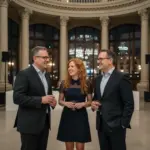

Madrid is at a crossroads, facing the critical challenge of reimagining its urban landscape to foster a more sustainable and equitable future. This pressing need was the central theme of a recent event hosted by the Official College of Architects of Madrid (COAM), which paid tribute to Anne Hidalgo, the former Mayor of Paris, for her transformative urban policies. The event, part of the Madrid2050 initiative, highlighted the “15-minute city” concept championed by urbanist Carlos Moreno, urging Madrid to draw inspiration from Paris’s audacious approach to urban planning.
The “15-Minute City”: A Blueprint for Madrid?
The core message resonating from the COAM event was the imperative to build a more localized and accessible city. The “15-minute city” model, advocated by Hidalgo and Moreno, envisions a polycentric urban environment where daily necessities – housing, work, education, healthcare, and culture – are all within a short walk or bike ride. This paradigm shift aims to liberate residents from the tyranny of long commutes and excessive reliance on private vehicles.
Sigfrido Herráez, dean of COAM, eloquently summarized this vision, stating, “There is no greater inequality than forced distance, nor greater loss of freedom than time wasted on endless journeys.” This perspective frames proximity not merely as a convenience but as a fundamental pillar of social equity, ensuring that all residents have equal access to essential services and opportunities.
Paris’s Transformative Journey: Reducing Car Dependency and Fostering Mixed-Use Spaces
Paris has concretely translated the “15-minute city” concept into a political strategy by progressively reducing private vehicle dependency, promoting mixed-use developments, revitalizing existing spaces, and strengthening neighborhoods. The city’s success in decreasing car usage from 60% to 20% was attributed not to direct prohibition but to a strategic enhancement of services, amenities, and urban alternatives. This approach offers a powerful lesson for Madrid, demonstrating that a shift away from car-centric planning can be achieved through positive incentives and improved urban infrastructure.
The Critical Role of Social Housing and Dialogue in Urban Transformation
Another crucial takeaway from the discussion was the indispensable role of social housing in maintaining a “mixed” city, preventing the displacement of middle and working classes. The debate underscored that a vibrant and dynamic city cannot thrive if the very people who make it function are pushed to increasingly distant peripheries. Housing affordability, rental market stability, and social cohesion were identified as inseparable components of contemporary urbanism, emphasizing that robust urban planning must address these interconnected challenges.
Hidalgo further stressed that large-scale urban transformations are only achievable through genuine dialogue and consensus-building. In an era of political polarization, she advocated for leadership rooted in negotiation and a reliance on the technical and scientific expertise of architects, urban planners, and other professionals. She lauded architects as “artists capable of narrating the city” and urged them to maintain an ongoing dialogue with the citizenry, ensuring that urban development is a collaborative and inclusive process.
Mayors as Catalysts for Change: Reclaiming Politics for the Common Good
Concluding her address, Hidalgo championed the pivotal role of mayors, calling for their voices to be amplified on both national and international stages to “rehabilitate politics” as a tool for democracy and the common good. Her poignant warning encapsulates the essence of the message conveyed in Madrid: “A city does not function if it forces you to travel two hours to live in it.” This statement serves as a powerful reminder that the true measure of a city’s success lies in its ability to provide a high quality of life for all its inhabitants, minimizing unnecessary commutes and maximizing access to essential services.
Madrid stands at a crucial juncture, with the opportunity to embrace these lessons from Paris and forge a more human-centric, sustainable, and equitable urban future. The path forward demands bold political commitment, strategic planning, and a steadfast dedication to dialogue and collaboration with its citizens.
Source: https://www.epe.es/es/madrid/20260504/lecciones-urbanismo-madrid-puede-aprender-paris-129736156