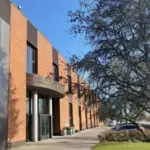

Urban construction often unearths surprises, but few are as revealing as the recent discovery in the heart of Barcelona’s Raval district. While it’s common for centuries-old remains to appear when excavating in the Gothic Quarter, this find is particularly significant. During preparatory work for the relocation of the Raval Nord Primary Care Centre to the Capella de la Misericòrdia, the subsoil of the old religious building revealed an archaeological site of immense historical value: medieval ovens.
A Window to Barcelona’s Medieval Past
What began as a technical intervention has opened a window into Barcelona’s medieval and modern past, with remains that allow for the reconstruction of the evolution of this space over nearly seven centuries. The discovery not only provides material data but also forces a rethinking of the urban history of one of the city’s most complex and transformed areas. Medieval ovens, productive structures, hydraulic remains, and walls from different eras depict a continuous occupation extending from the 14th to the 20th century. The excavation, promoted by the Servei Català de la Salut and supervised by urban archaeology specialists, confirms that the Raval was much more than an assistance neighbourhood: it was also a space of production, abandonment, reuse, and constant adaptation.
The Raval Discovery: Medieval Ovens
The oldest documented remains date back to between the 14th and 15th centuries, when the area was occupied by a neighbourhood of specialized artisans. The appearance of two circular ovens excavated in the subsoil, about two meters in diameter and with a central pillar, clearly points to a productive activity linked to ceramics or similar materials. Additionally, part of a rectangular oven further reinforces the interpretation of the site as an ancient artisan centre.
These types of installations were not common within the consolidated urban core, indicating that the Raval then acted as a peripheral space, suitable for activities that required continuous fire and a certain distance from the administrative and religious centre of the medieval city.
Abandonment and New Constructions Between the 15th and 16th Centuries
Archaeological data indicates that, during the 15th and 16th centuries, the area experienced a partial period of abandonment. Subsequently, remains of an earlier building, preceding the current Capella de la Misericòrdia, began to appear. Walls, pavements, and rooms, as well as exterior spaces, have been preserved, allowing for a reorganization of the terrain to be identified.
Among the most significant elements of the medieval ovens is a cistern, the reservoir of a fountain located in the centre of the current chapel, in addition to several wells and structural fittings. These findings reveal complex water management and continuous use of the space, adapted to the changing needs of the city.
The Consolidation of the Urban Space for Assistance
At the end of the 17th century and throughout the 18th and 19th centuries, the area underwent a profound transformation with the expansion of the Casa de la Misericordia. During this period, water pipes and sewerage were rebuilt, which is reflected in the documented archaeological layers. The space then consolidated as an assistance complex, in line with the urban and social policies of the time.
It was between the end of the 19th century and the beginning of the 20th century that the current Capilla de la Misericòrdia was built, inaugurated in 1884. Despite the reforms, the building retained walls, pavements, and structures from earlier phases, becoming an authentic architectural palimpsest where each era left its mark.
A Key Site to Understand the Evolution of the Raval
The remains found allow for a complete historical reading of the Raval, from its late medieval productive stage to its consolidation as an assistance space. This continuity of use is exceptional and offers information to understand how Barcelona has integrated, transformed, and re-signified its spaces over time.
According to the Archaeology Service of the Barcelona City Council, this site will contribute to expanding knowledge about the urban evolution of the neighbourhood and its relationship with the economic and social dynamics of the city. Furthermore, it reinforces the importance of preventive archaeology in contemporary projects.
A Major Archaeological Intervention
Archaeological work began in January 2025 and is being carried out by CAT Arqueólogos, with a team of between twelve and twenty professionals. Technical direction has been in charge of Emiliano Hinojo in the preliminary phase and Daniel Vázquez during the extensive excavation. The intervention has been necessary for the construction of an underground floor in the new health facility, located on Montalegre Street.
Although the works will transform the space, the project contemplates the visible preservation of the structure of the old church, integrating historical heritage into the new health use of the building.
Heritage and City: A Possible Coexistence
The discovery of the medieval ovens confirms that Barcelona continues to be a living city, even underground. Every urban intervention offers the opportunity to discover forgotten fragments of its history and integrate them into the present.
Source: https://okdiario.com/cataluna/lo-que-han-encontrado-barcelona-reescribe-historia-hornos-medievales-mitad-del-raval-16246856