
Madrid’s Economic Locomotive: A Tale of Two Cities Amidst Prosperity
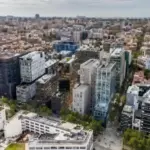
Madrid, the vibrant capital of Spain, is often lauded as an economic powerhouse, a ‘locomotive’ driving national growth. Recent reports from the City Council reinforce this narrative, showcasing robust economic expansion, a thriving job market, and a burgeoning influence on the national and European economic landscape. However, beneath this veneer of prosperity lies a stark and persistent reality: a widening chasm of inequality between the city’s affluent northern and western districts, and its struggling southern and eastern counterparts. This dichotomy raises critical questions about the nature of Madrid’s growth and whether its impressive macroeconomic figures truly translate into widespread prosperity for all its citizens.
The Shining Facade: Macroeconomic Triumphs
The City Council’s report, presented by Deputy Mayor Inma Sanz, paints an undeniably optimistic picture. Following a 2.9% growth in 2025, Madrid’s GDP is projected to expand by 2.4% in 2026, outperforming the national forecast of 2.2%. The city boasts a remarkable per capita GDP of 58,102 euros, a staggering 78% higher than the Spanish average. Further bolstering this image are statistics such as a population of 3.53 million, 2.46 million Social Security affiliates, a low unemployment rate of 6.6% at the close of 2025, and the lowest registered unemployment in a March since 2008. These figures, as Sanz proudly declared, position Madrid as a ‘dynamic’ and ‘open’ city with an increasingly diverse economy, blending traditional sectors with innovation and knowledge-intensive industries.
The Shadowy Reality: Persistent Disparities
Yet, the very report that champions Madrid’s economic prowess conspicuously sidesteps the uncomfortable truth of its internal inequalities. While the Deputy Mayor acknowledged the existence of these disparities, she framed them as an inherent characteristic of all major capitals with high GDP and per capita GDP levels. This explanation, however, fails to fully address the profound impact these differences have on the daily lives of countless Madrileños.
Critics, like Más Madrid councilor Sara Ladra, are quick to point out the glaring omissions in the official narrative. Ladra argues that Madrid is, in fact, a region where inequality is growing fastest, with income disparities reaching up to six times between the wealthiest 20% and the lowest-income earners. Her indictment is unequivocal: “Almeida has been selling for years that the better Madrid does, the better all Madrileños will do, and this is absolutely false. The truth is that with the PP, the better the rich do, the worse the rest do.” This sentiment resonates deeply with residents struggling to make ends meet in the less privileged areas of the city.
Investment vs. Impact: A Question of Effectiveness
In response to concerns about inequality, Deputy Mayor Sanz highlighted the City Council’s commitment to investing in the city’s most vulnerable areas. She stated that over 1.3 billion euros have been allocated to the southern and eastern districts in territorialized investments over the past two terms, with districts currently managing over 1 billion euros to address these situations. Sanz asserted that these efforts lay a solid foundation for Madrid’s growth to reach “every corner of Madrid,” vowing to continue implementing “rebalancing plans so that no one is left behind.”
However, the efficacy of these investments remains a contentious issue. While financial commitments are significant, the persistence of deep-seated inequalities suggests that either the scale of the problem outweighs the current interventions, or the strategies employed are not sufficiently targeted or transformative. The question is not merely about spending money, but about achieving tangible, sustainable improvements in the lives of residents in these underserved areas. Are these investments truly bridging the gap, or are they merely palliatives in the face of systemic issues?
The Broader Context: A National Trend?
The situation in Madrid is not an isolated phenomenon. Many rapidly growing urban centers grapple with the challenge of ensuring that economic prosperity is broadly shared. The “locomotive” metaphor, while evocative of progress, can also imply that some carriages are being pulled faster than others, leaving a significant portion of the population trailing behind. This raises a crucial policy dilemma: how can cities foster dynamic economic growth while simultaneously mitigating the inherent tendencies towards spatial and social inequality?
The debate in Madrid underscores a fundamental tension between economic efficiency and social equity. While a strong economy is vital for job creation and public services, if its benefits disproportionately accrue to a select few, it risks undermining social cohesion and long-term stability. The challenge for Madrid’s leadership, and indeed for any rapidly developing metropolis, is to move beyond mere declarations of intent and to implement policies that actively promote inclusive growth, ensuring that the fruits of economic success are enjoyed by all, not just a privileged few.
Looking Ahead: A Test of Political Will
As Madrid continues its economic ascent, the spotlight will remain firmly fixed on its ability to address the pervasive issue of territorial inequality. The coming years will serve as a crucial test of political will and strategic foresight. Will the city truly become a model of inclusive growth, or will it remain a city of stark contrasts, where the gleaming towers of prosperity cast long shadows over struggling neighborhoods?
The rhetoric of a “locomotive” must be matched by the reality of a comprehensive and equitable distribution of opportunities and resources. Until then, the story of Madrid’s economic success will remain incomplete, a narrative of triumph for some, but of persistent struggle for many others. The true measure of its greatness will not be its overall GDP, but its capacity to uplift all its citizens, ensuring that no district is left behind in its relentless pursuit of progress.
Source: epe.es