
Barcelona’s Urban Furniture Revolution: Greenery, Technology, and Home Comforts Reshape City Streets
Barcelona, April 4, 2026 – The streets of Barcelona are undergoing a significant transformation, with the latest urban furniture designs integrating vegetation, advanced technology, and a touch of domestic comfort. This evolution is a direct result of traffic calming initiatives and a profound shift in urban planning, moving away from car-centric design towards creating more inviting and communal public spaces.
Daniel Milà, General Director of Escofet, a historic Barcelona design company, explained to EL PERIÓDICO that “previously, cars occupied the center, but in recent years, citizens have colonized urban space.” This sentiment is echoed by Arnau Miralpeix, Marketing Director of Benito Urban, a leading European urban furniture manufacturer, who notes that policies such as protecting school environments and creating green axes have driven a restructuring of public spaces, fostering more habitable, safe, and accessible environments for collective enjoyment.
The Evolution of Urban Furniture: From Function to Experience
The past five years have seen a remarkable evolution in urban furniture. Carlos Fábregas, Manager of Grup Fábregas, a long-time supplier to Barcelona, highlights the COVID-19 pandemic as a turning point: “Now people want to live more life on the street.” Nicolás Capo, General Director of Urbidermis, with over 35 years of experience in urban elements, adds that due to housing shortages and rising costs, society demands an extension of domestic space into the public realm, with urban equipment mirroring the comforts of a living room.
The push for urban re-naturalization further fuels this trend. Capo states that “concrete squares, without a single shade or tree, belong to an urban planning model of the past.” He emphasizes that “current urbanism reincorporates green into the urban core,” and “thanks to furniture, a green island can be generated in the middle of a park,” according to Milà. There is also a growing need for climate shelters to mitigate extreme heat, increasing demand for shaded areas.
Beyond Seating: Multifunctional and Smart Urban Elements
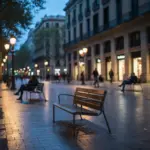
In this new paradigm, urban furniture is no longer merely functional; it is an integral part of urban design and architecture. Benches, for instance, have transformed. Milà notes that “they used to just be for sitting; today, they are an integrating element that incorporates green areas, creates children’s play spaces, and fosters social interaction.”
The possibilities have expanded dramatically to include individual chairs (high and low), loungers, concrete benches, picnic tables, and even modular structures combining benches with planters. The four leading manufacturers interviewed by EL PERIÓDICO agree that what was once unthinkable-like installing a table in a public space-is now common. Miralpeix observes, “Today we can see people having picnics, playing sports, reading a book, or lying down writing.”
Urban furniture is also increasingly integrating technological advancements, aligning with the ‘smart cities’ philosophy and sustainability goals. Companies like Urbidermis now incorporate electronic components and sensors to monitor bench occupancy, usage times, and detect vandalism or damage. Escofet is developing more sustainable solutions, such as concrete benches made with recycled cement, capable of reducing carbon footprints by 30% to 70%.
Barcelona’s Vision for a Future-Proof City
Ultimately, Benito Urban emphasizes that citizens seek spaces offering security, health, leisure, and comfort. Urbidermis concludes that Barcelona aims to be a pioneer in this urban revolution, transforming streets into green and livable environments.
The city’s commitment to these changes is evident in its ongoing projects and plans to adapt to the evolving needs of its residents and visitors, making public spaces more enjoyable and functional for everyone.
Source: elperiodico.com.cat